Raised garden bed ideas
Raised Garden Bed Ideas: 8 Beds and the Sizes That Work
Raised garden beds warm up early in spring, drain well and keep soil loose because nobody walks on it. The question is which kind fits your space. Here a sunny strip of lawn along a fence and a small paved townhouse patio each get several raised beds: cedar boxes in a row, round metal beds, a two-tier bed, a trellis arch, a stone keyhole bed, waist-high planters on legs, a brick bed and stock tanks. Below the pictures are the sizes extension services recommend and how much soil to buy.
Try raised beds on your yard photoSign in with Google or email to render. New accounts get 1 free render (watermarked).
Every picture on this page is one run of an AI image-edit model on an AI-drawn stand-in photo, not a real house, and not picked from several tries. Under each picture is the instruction we sent and what changed, including anything that changed that we did not ask for. Colors and sizes are approximate: check real samples and measurements before you buy.
Five ideas for a strip of lawn along a fence
The before photo is a sunny strip of lawn about 6 m (20 ft) long beside a cedar board fence, with the corner of the house on the right.
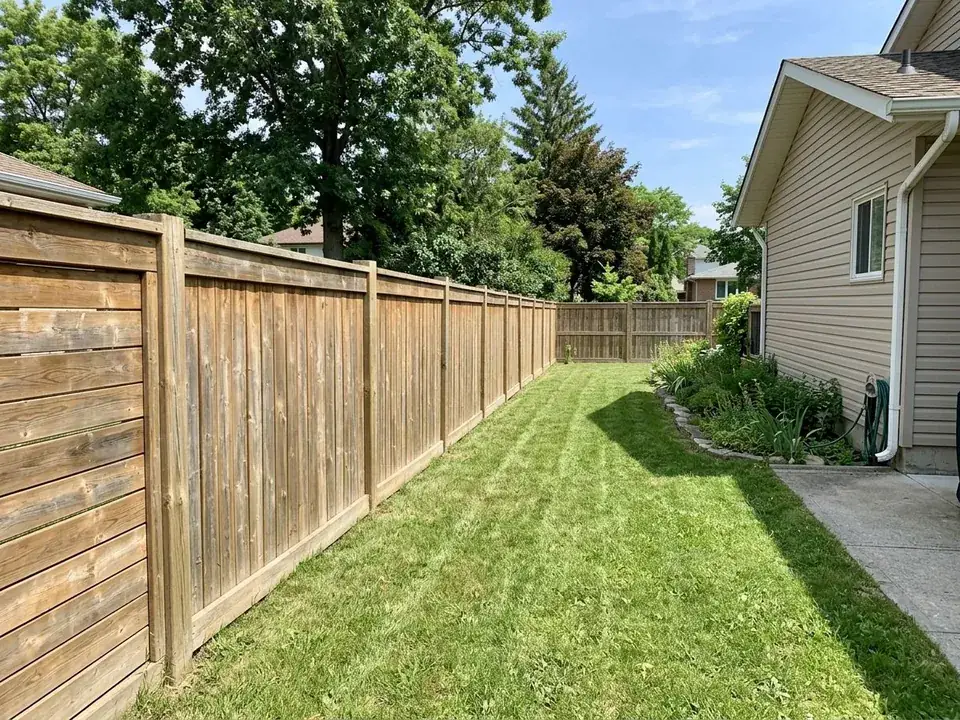
Before
AI-drawn stand-in: a sunny lawn strip along a cedar board fence.
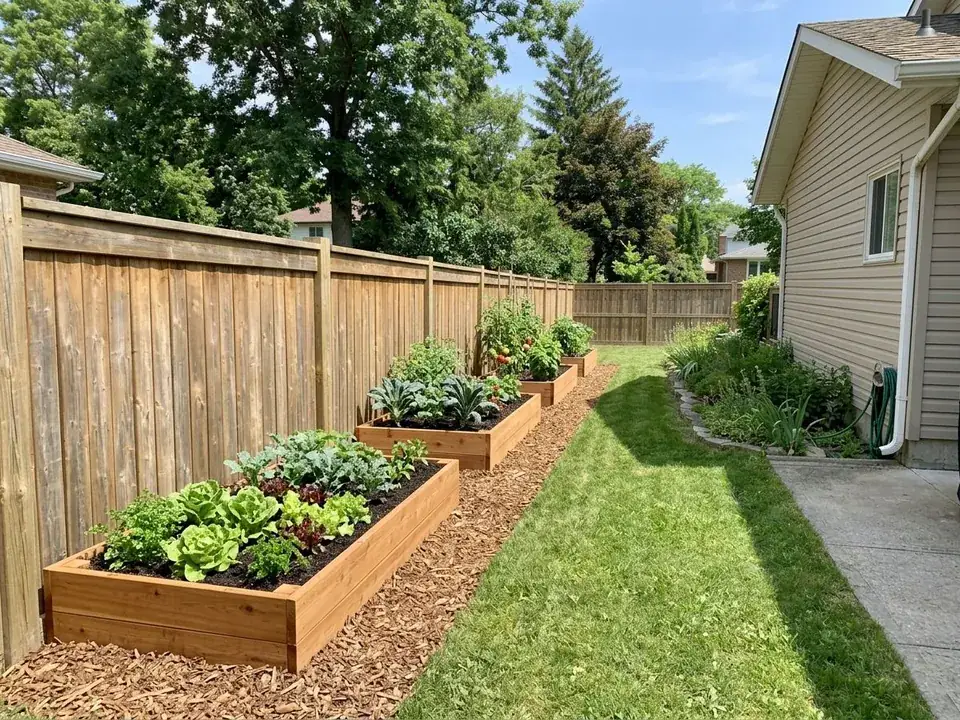
Cedar beds in a row
Asked: "Add ONLY raised garden beds: three rectangular cedar raised beds about 30 cm high in a row along the fence, filled with dark soil and planted with lettuce, kale and tomatoes, with a mulch path between them." Three rectangular cedar beds with lettuce, kale and tomatoes were added along the fence, with wood-chip mulch around and between them.
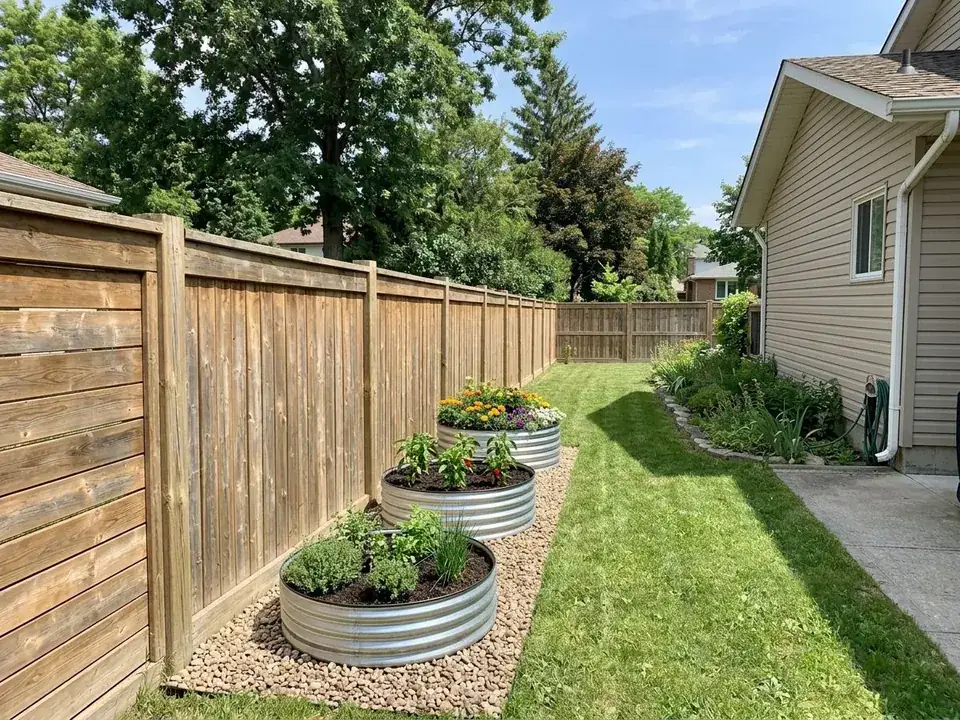
Round galvanized metal beds
Asked: "Add ONLY raised garden beds: three round galvanized metal raised beds of different sizes along the fence, filled with soil, planted with herbs, peppers and flowers, on a pea gravel area." Three round metal beds of different sizes, planted with herbs, peppers and flowers, were set on a strip of pea gravel along the fence.
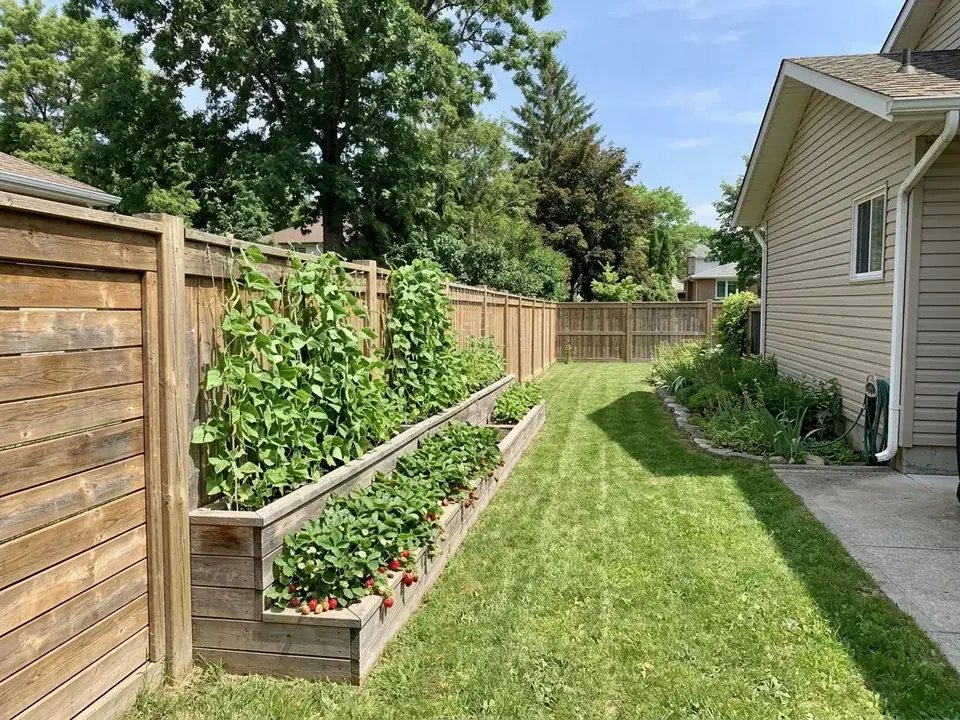
Two-tier bed
Asked: "Add ONLY raised garden beds: a long two-tier wooden raised bed against the fence, the back tier higher than the front, planted with strawberries in front and beans behind." A long two-level wooden bed was built against the fence, with strawberries in the low front tier and climbing beans in the higher back tier.
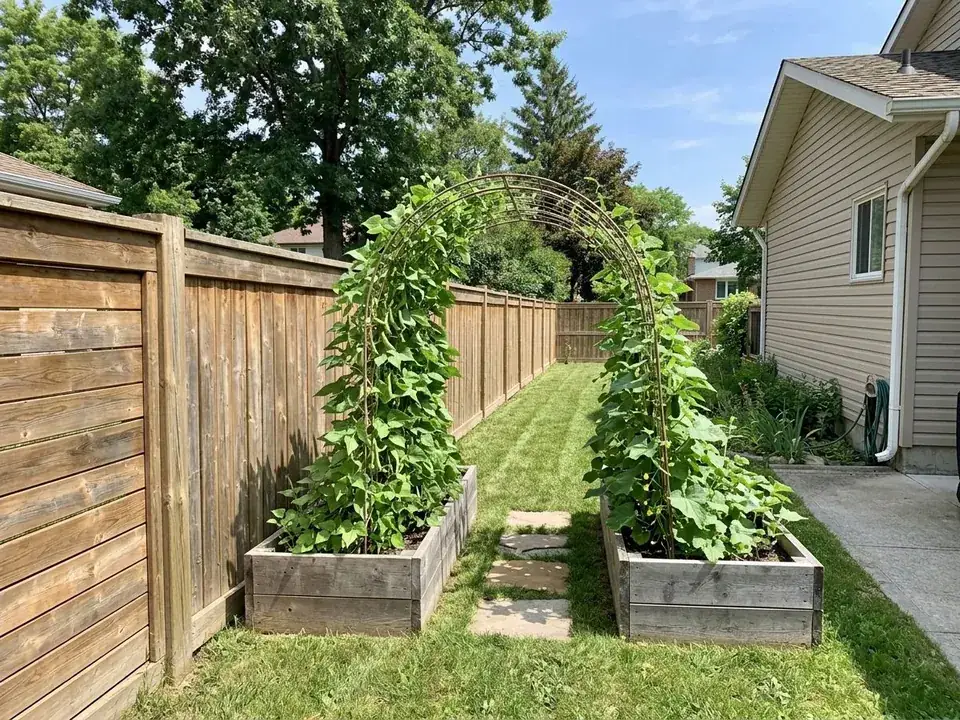
Two beds joined by a trellis arch
Asked: "Add ONLY raised garden beds: two wooden raised beds joined by an arched metal trellis between them covered in climbing beans and cucumbers, with a short path under the arch." Two wooden beds with an arched metal trellis between them were added, covered in beans and cucumbers, with stepping stones under the arch.
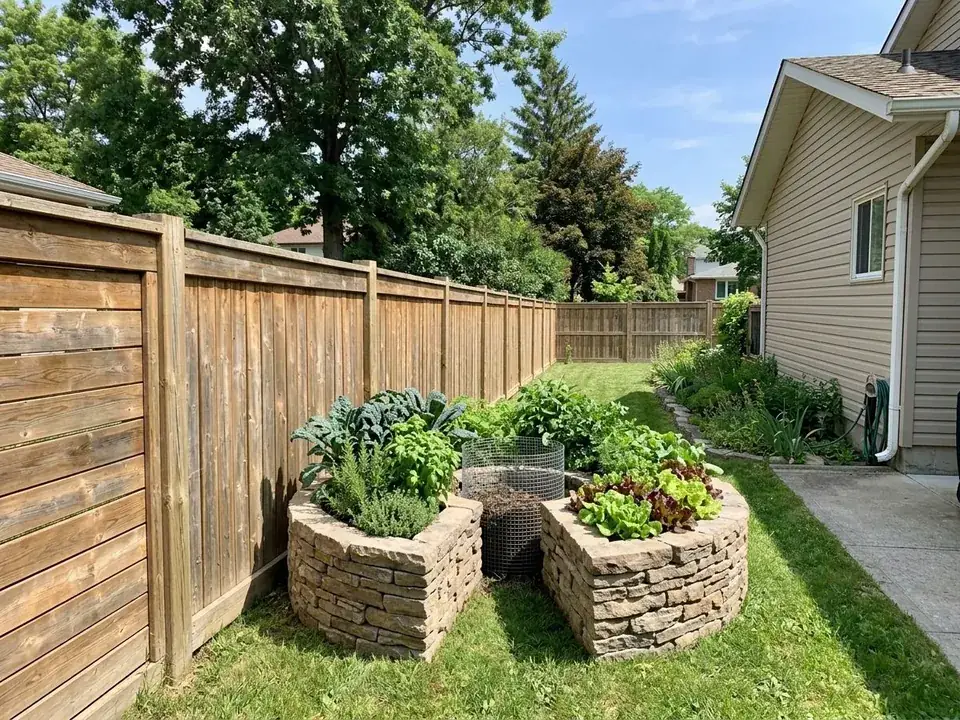
Stone keyhole bed
Asked: "Add ONLY a raised garden bed: one round keyhole garden bed made of stacked stone, about 60 cm high, with a wedge-shaped access path to a central compost basket, planted with greens and herbs." A dry-stone bed with a wire compost basket in the middle, planted with greens and herbs, was added. Not asked: it came out looking more like two half-round beds either side of the basket than one round keyhole bed.
Three ideas for a small paved patio
The before photo is the paved corner of a townhouse patio, with a red brick wall on one side, a wood fence on the other and a hose reel.
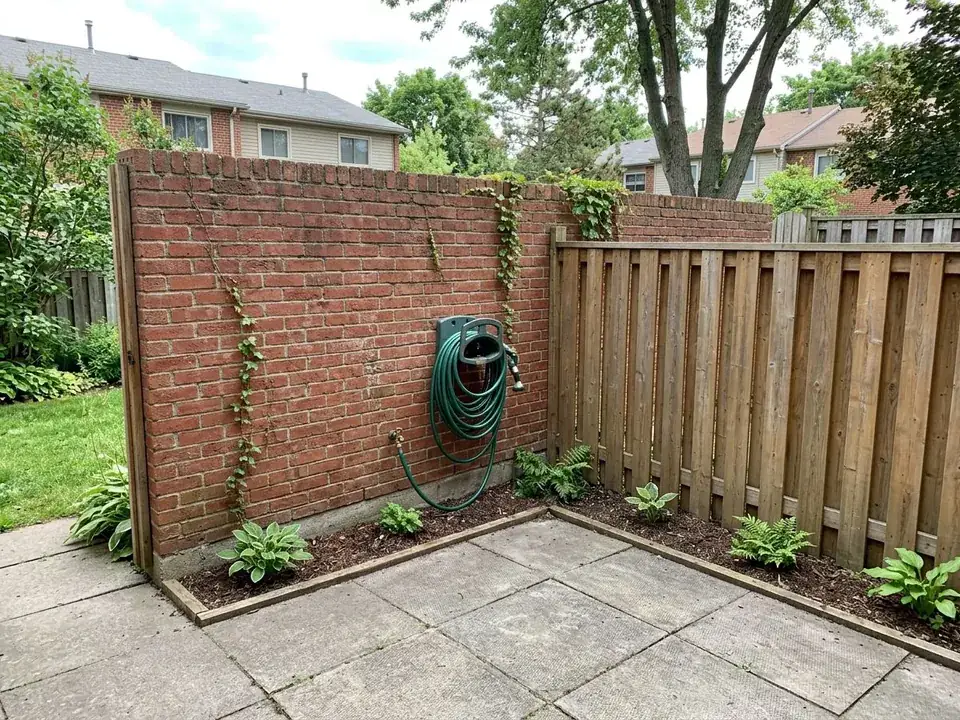
Before
AI-drawn stand-in: a small paved patio corner with a brick wall, wood fence and hose reel.
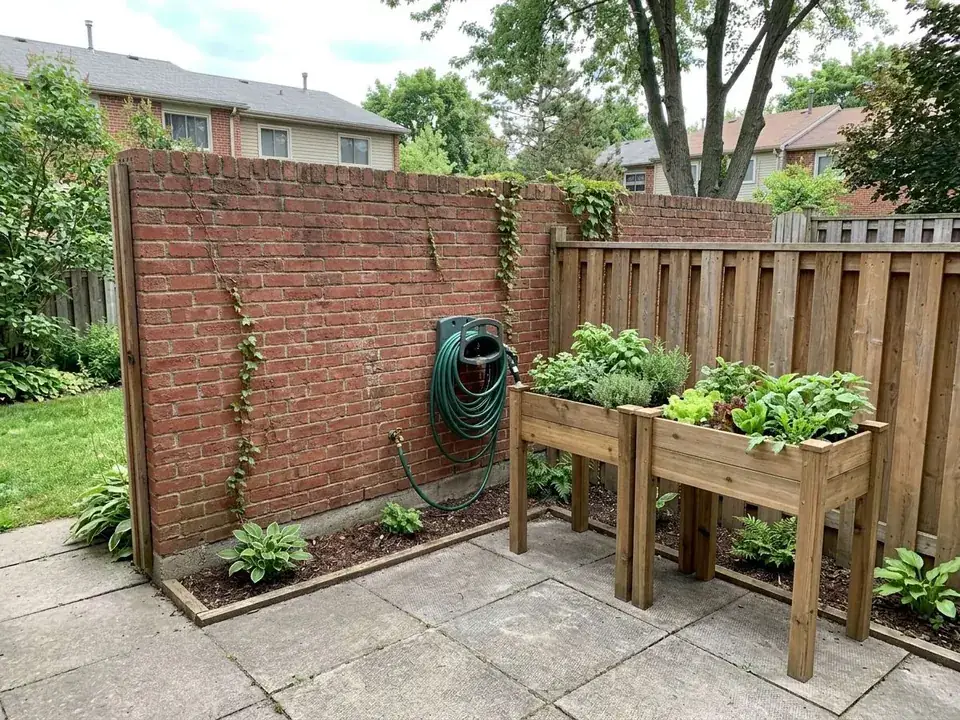
Waist-high planters on legs
Asked: "Add ONLY raised garden beds: two elevated wooden planter boxes on legs at waist height on the patio, planted with herbs and salad greens." Two wooden planter boxes on legs, planted with herbs and salad greens, were set in the corner. The hose reel and the small planting strip were kept.
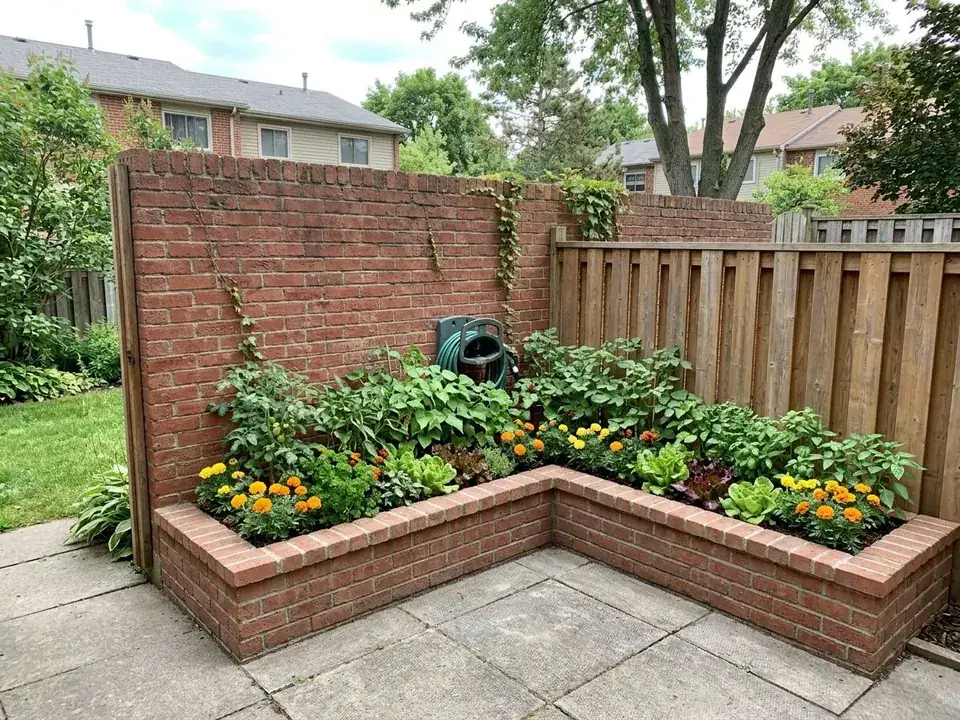
L-shaped brick bed
Asked: "Add ONLY raised garden beds: an L-shaped raised bed built from red brick matching the wall, about 45 cm high, along the brick wall and fence, planted with vegetables and marigolds." An L-shaped brick bed along the wall and fence was built and planted with vegetables and marigolds. The hose reel was kept.
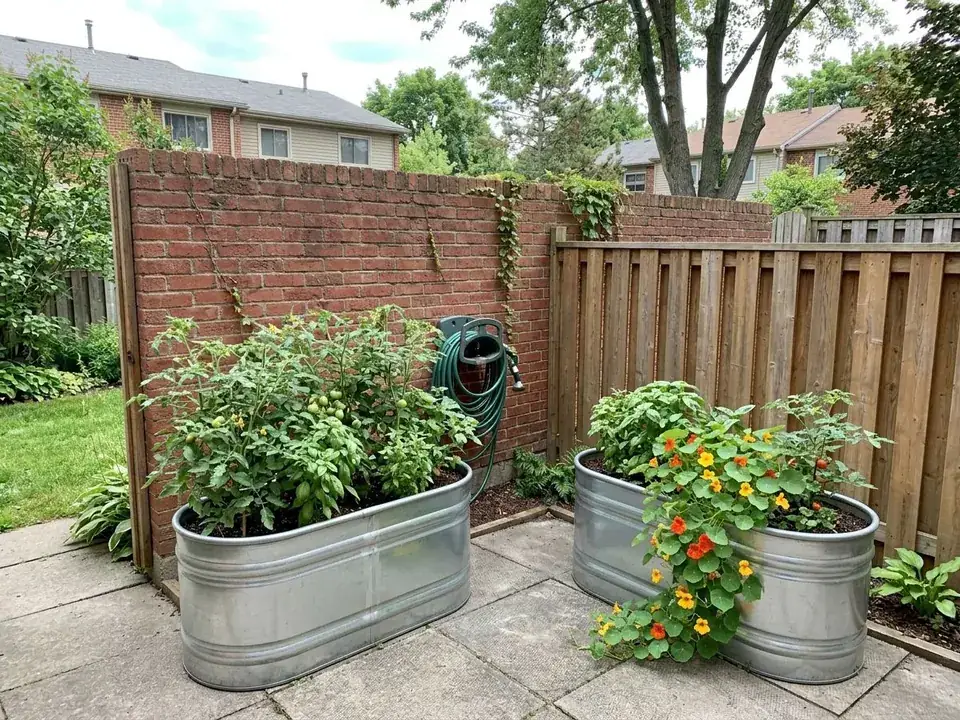
Galvanized stock tank beds
Asked: "Add ONLY raised garden beds: two oval galvanized stock tanks used as raised beds on the patio, planted with tomatoes, basil and trailing nasturtiums." Two oval stock tanks planted with tomatoes, basil and trailing nasturtiums were placed on the patio.
How wide and how tall to make a raised bed
Width: extension services (Oklahoma State, Mississippi State and Oregon State among them) suggest no more than about 4 ft (1.2 m) wide, so you can reach the middle from either side without stepping on the soil. A bed against a fence or wall can only be reached from one side, so keep it to about 1.5 to 2 ft (45 to 60 cm) wide, as Iowa State suggests. For children, about 3 ft wide is easier.
Height: 6 to 12 in (15 to 30 cm) of raised soil is the usual minimum (Utah State, UC ANR), and most vegetables do best with 10 to 12 in or more of loose soil. Root crops like carrots and parsnips like it deeper, and 18 to 24 in beds (45 to 60 cm) mean much less bending. Waist-high planters on legs suit herbs and salad greens, which have shallow roots.
Length is up to you, but long beds are tiring to walk around; many gardeners stop at 8 to 12 ft. Leave paths wide enough to kneel or push a wheelbarrow, about 18 to 24 in (45 to 60 cm).
| Bed | Width | Soil depth | Good for |
|---|---|---|---|
| Open bed, reach from both sides | Up to 4 ft (1.2 m) | 10-12 in (25-30 cm) | Most vegetables |
| Bed against a fence or wall | 1.5-2 ft (45-60 cm) | 10-12 in (25-30 cm) | Herbs, greens, climbers on the fence |
| Deep bed | Up to 4 ft (1.2 m) | 18-24 in (45-60 cm) | Root crops, less bending |
| Planter on legs | 2 ft (60 cm) or less | 8-12 in (20-30 cm) | Herbs, salad greens, patios |
Raised bed materials compared
| Material | Look | Lifespan and upkeep | Notes |
|---|---|---|---|
| Cedar or redwood boards | Warm, natural | Naturally rot-resistant; lasts years untreated | Easy to build and cut to size |
| Galvanized metal | Modern, farmhouse | Long-lasting, no upkeep | Can warm up faster in full sun; edges should be rolled or capped |
| Brick or stone | Permanent, matches walls | Lasts decades | Costs the most; needs a footing or level base |
| Stock tanks | Farmhouse | Long-lasting | Drill drainage holes in the bottom |
| Planter on legs | Tidy, compact | Depends on the wood | Good where there is no soil, like a patio or balcony |
Where to put a raised bed
- Sun: most vegetables want at least 6 hours of direct sun a day, and fruiting crops like tomatoes and peppers do best with 8 or more.
- Water: put beds within reach of a hose or tap, or run drip irrigation to them. Raised beds dry out faster than the ground.
- Level ground: build on level ground or level the bed, so water soaks in evenly instead of running to one end.
- Fence lines: a fence gives climbing crops something to grow on, but keep the bed narrow so you can reach the back.
- Paving: on a patio, use beds with drainage holes and keep water from staining the paving or running toward the house.
How much soil does a raised bed need?
Multiply length by width by depth. A 4 ft by 8 ft bed filled 12 in deep holds 4 x 8 x 1 = 32 cubic feet, which is about 1.2 cubic yards (32 / 27). That is roughly 16 of the common 2 cubic foot bags. Many gardeners fill with a mix of topsoil and compost rather than topsoil alone, and the soil settles over the first season, so plan to top it up.
Our free topsoil calculator does the sum for several beds at once, in cubic yards, cubic meters and bags.
How these pictures were made
Each picture is one run of an AI image-edit model on an AI-drawn stand-in photo, with an instruction such as "Add ONLY raised garden beds: three rectangular cedar raised beds about 30 cm high in a row along the fence". Captions say what changed, including what we did not ask for. Treat them as ideas and use the sizes above when you build.
Frequently asked questions
How wide should a raised garden bed be?
No more than about 4 ft (1.2 m) if you can reach it from both sides, and about 1.5 to 2 ft (45 to 60 cm) if it sits against a fence or wall, so you can reach the middle without stepping on the soil.
How deep should a raised garden bed be?
At least 6 to 12 in (15 to 30 cm). Most vegetables do best with 10 to 12 in or more of loose soil, and root crops like 18 to 24 in.
What is the best material for a raised garden bed?
Cedar or redwood boards are easy to build and rot-resistant. Galvanized metal lasts longer with no upkeep. Brick and stone are permanent but cost the most.
How much soil do I need for a 4x8 raised bed?
Filled 12 in deep, a 4 ft by 8 ft bed holds 32 cubic feet, about 1.2 cubic yards or 16 bags of 2 cubic feet.
Can I put a raised bed on a patio?
Yes. Use a bed with drainage, such as planters on legs or stock tanks with holes drilled in the bottom, and keep the runoff away from the house.
Are these real gardens?
No. The before photos are AI-drawn stand-ins and each bed is an AI edit. They show how an idea could look, not a built design.
Try a raised bed in your own yard first
Take a photo of the spot, try a few bed styles, and build the one that fits your space and your reach.
Try raised beds on your yard photoRelated: Backyard landscaping ideas · Small backyard ideas · Topsoil calculator · Gravel calculator · Sod calculator · Garden room design · Landscape design tool · Pricing